
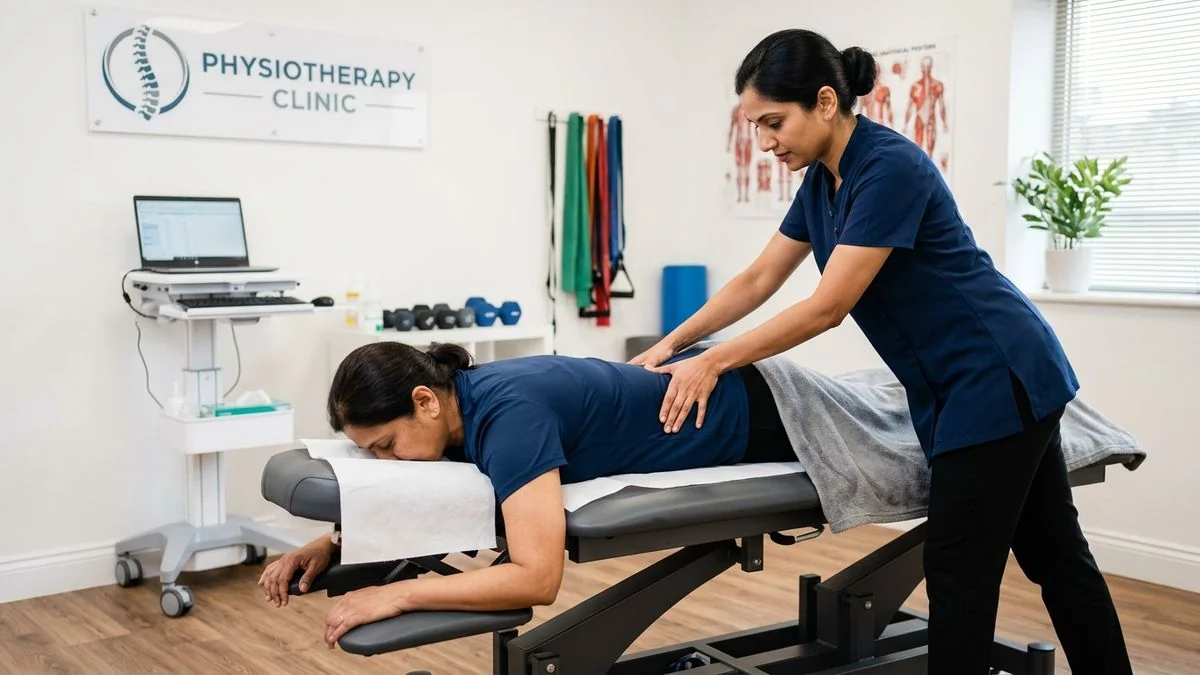
Restore Core Strength, Close Abdominal Gaps & Rebuild Pelvic Floor
“Expert female-led postpartum care by Dr. Anshika Maheshwari in Sector 78 Noida.”
Pregnancy and childbirth place immense physical stress on the pelvic floor muscles, abdominal wall, and lumbar spine. Diastasis recti (the separation of the left and right rectus abdominis muscles) and pelvic floor weakness frequently lead to lower back pain, pelvic girdle instability, and urinary incontinence. Led by Dr. Anshika Maheshwari, our specialized women’s health clinic provides safe, personalized recovery.
Common Symptoms
- Visible abdominal bulge or "doming/coning" along the midline when sitting up
- Persistent lower back pain, sacroiliac joint pain, and pelvic girdle ache post-delivery
- Pelvic floor weakness or stress urinary leakage when coughing, sneezing, or laughing
- Weak core muscles and poor posture while carrying the baby
- Pain around the C-section scar or perineal discomfort
Root Biomechanical Causes
- Hormone-induced (relaxin) ligamentous laxity and linea alba stretching during pregnancy
- Prolonged intra-abdominal pressure during labor straining the pelvic diaphragm
- Inappropriate early postpartum crunches or heavy lifting worsening muscle separation
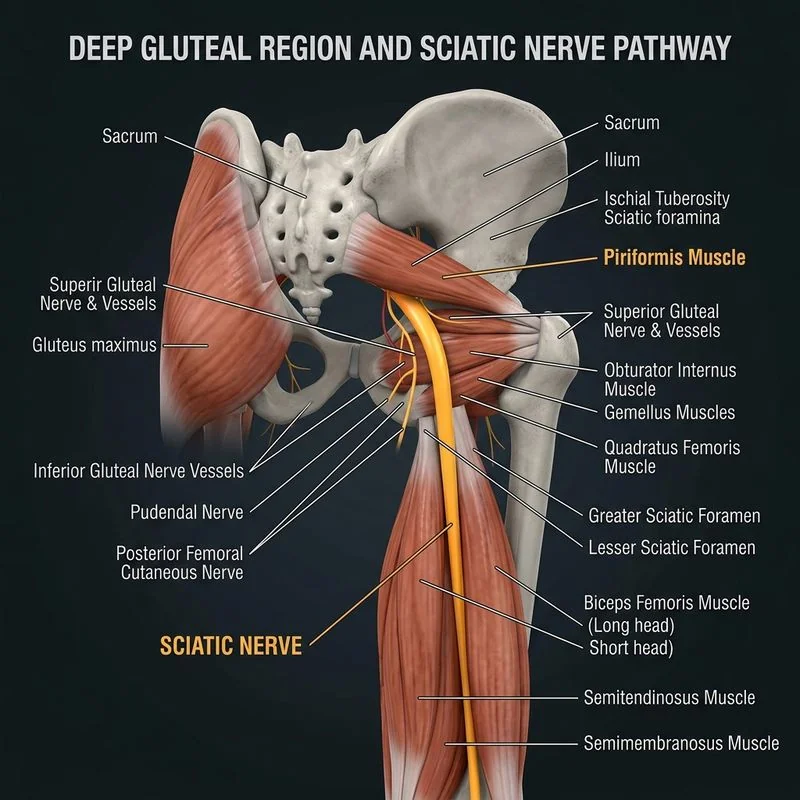
Biomechanical Anatomy & Nerve Path
Understanding the underlying spinal segments, nerve pathways, and joint lines allows us to apply precise manual techniques to decompress impingements without invasive procedures.
Clinical Insight
Every treatment at Be Your Therapist is administered directly by Dr. Anshika Maheshwari (MPT - Ortho) with specialized osteopathic and manual precision.
Our 4-Phase Non-Surgical Treatment Protocol
Phase 1: Clinical Gap Measurement & Pelvic Assessment
Precise palpation and caliper measurement of the inter-recti distance (diastasis gap) and pelvic floor baseline strength.
Phase 2: Deep Transverse Abdominis & Pelvic Floor Activation
Gentle, hypopressive breathing and coordinated pelvic floor recruitment to re-tension the linea alba without bulging.
Phase 3: Pelvic Girdle Alignment & Spine Support
Realigning the pelvis and stabilizing the sacroiliac joints to relieve pregnancy-related back pain.
Phase 4: Functional Motherhood Conditioning
Ergonomic coaching for nursing, baby carrying, and safe return to fitness and running.
Expected Recovery Timeline
Weeks 1–2: Significant reduction in lower back ache and improved bladder control
Weeks 3–5: Measurable closure of the abdominal gap (1-2 finger-width reduction)
Weeks 6–8: Restored flat abdominal tone and confident return to exercise
Clinical Home Exercise Prescriptions
Reinforce joint alignment between clinical sessions with these prescribed home drills.
Diaphragmatic Breathing with Core Bracing
Focus: Transverse abdominis engagement
Heel Slides in Crook Lying
Focus: Core stabilization without intra-abdominal pressure
Pelvic Floor Coordinated Kegel Holds
Focus: Pelvic hammock tone
Integrated Therapies Used for this Condition
Frequently Asked Questions
When should I start post-pregnancy physiotherapy?
You can begin gentle breathing and pelvic floor exercises 2 to 3 weeks after normal vaginal delivery, and 4 to 6 weeks after a C-section (upon obstetrician clearance).
Can diastasis recti (abdominal separation) heal months or years after delivery?
Yes! Even if it has been months or years since childbirth, specialized targeted core neuromuscular retraining can successfully re-tension the linea alba and close the gap.
Why choose Dr. Anshika Maheshwari for women’s health physiotherapy in Noida?
As an experienced female clinical lead with specialized post-graduate training, Dr. Anshika provides a deeply empathetic, private, and evidence-based environment for women.
Ready to begin your recovery?
Book a 1-on-1 diagnostic consultation with Dr. Anshika Maheshwari at Be Your Therapist in Sector 78 Noida.