
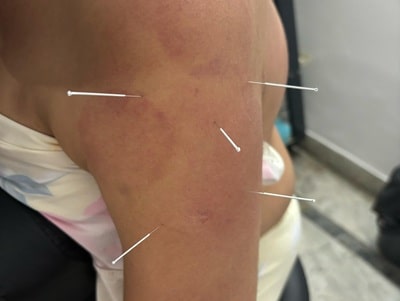
Dry Needling Treatment in Noida Sector 78
“Targeted trigger-point stimulation to instantly release deep muscle spasms.”
Dry Needling is a clinical technique where fine, sterile micro-needles are inserted directly into hyperirritable spots in muscles (trigger points). This mechanical stimulation resets muscle tone, relieves local spasms, and immediately restores muscle flexibility and blood flow.
Estimated Duration
20 - 30 minsClinical Context & Scope
Dry Needling is a evidence-based Western clinical technique that is highly distinct from traditional acupuncture. Rather than targeting energy meridians, dry needling targets specific anatomical structures—primarily myofascial trigger points, which are tight, hyperirritable bands within muscles. When a micro-needle penetrates a trigger point, it elicits a 'local twitch response'—an involuntary contraction and subsequent relaxation of the muscle fibers. This is highly effective for deep-seated muscle spasms that manual massage cannot reach.
Who is this Recommended For?
- Patients with chronic, stubborn muscle knots in the shoulders
- Individuals with referred pain patterns (tension headaches, sciatica)
- Athletes experiencing persistent hamstring or calf tightness
- People with chronic myofascial pain syndrome
Biomechanical Mechanism
How it Works
The insertion of the needle disrupts the dysfunctional motor endplates of the muscle fibers, which stops the continuous release of acetylcholine (the chemical causing the spasm). The micro-trauma also triggers local vasodilation, bringing oxygen-rich blood to the starved muscle tissue. This normalizes the tissue's chemical pH, washing away accumulated lactic acid and inflammatory cytokines.
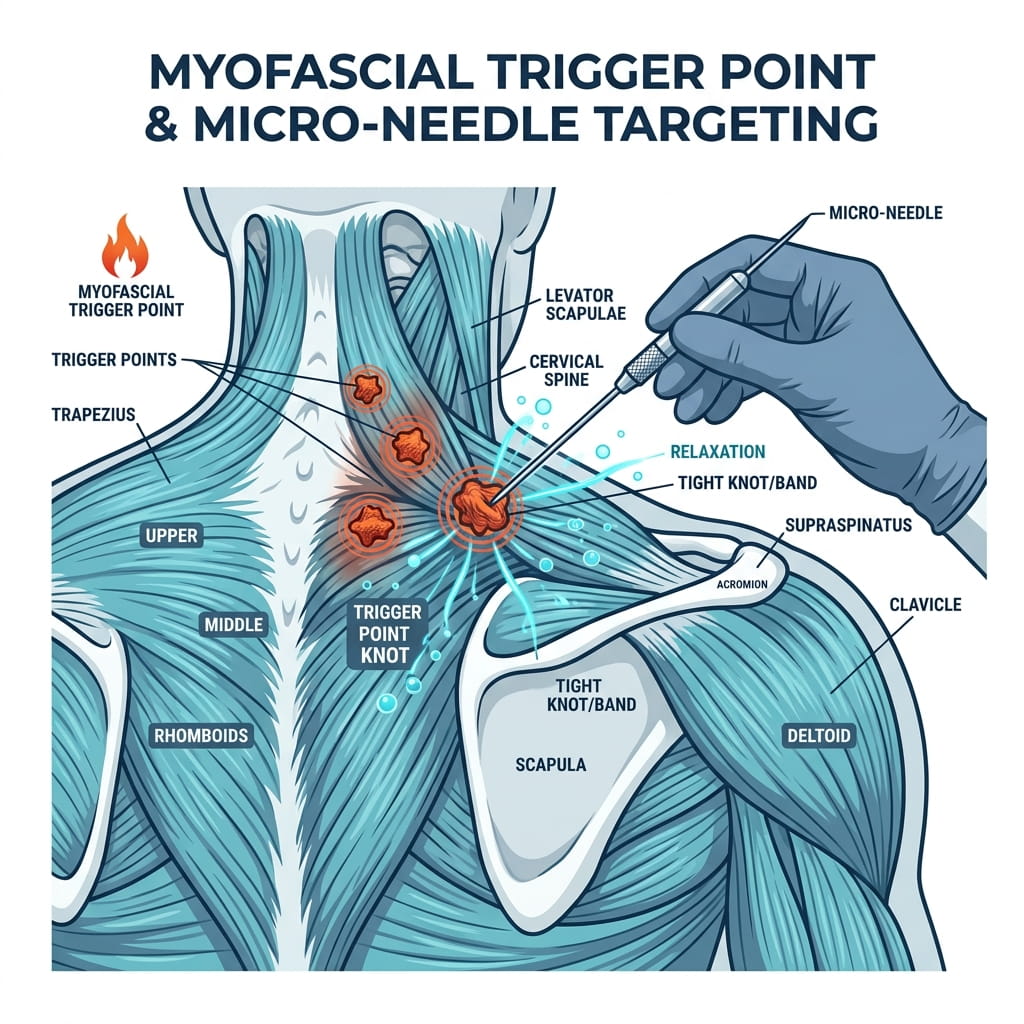
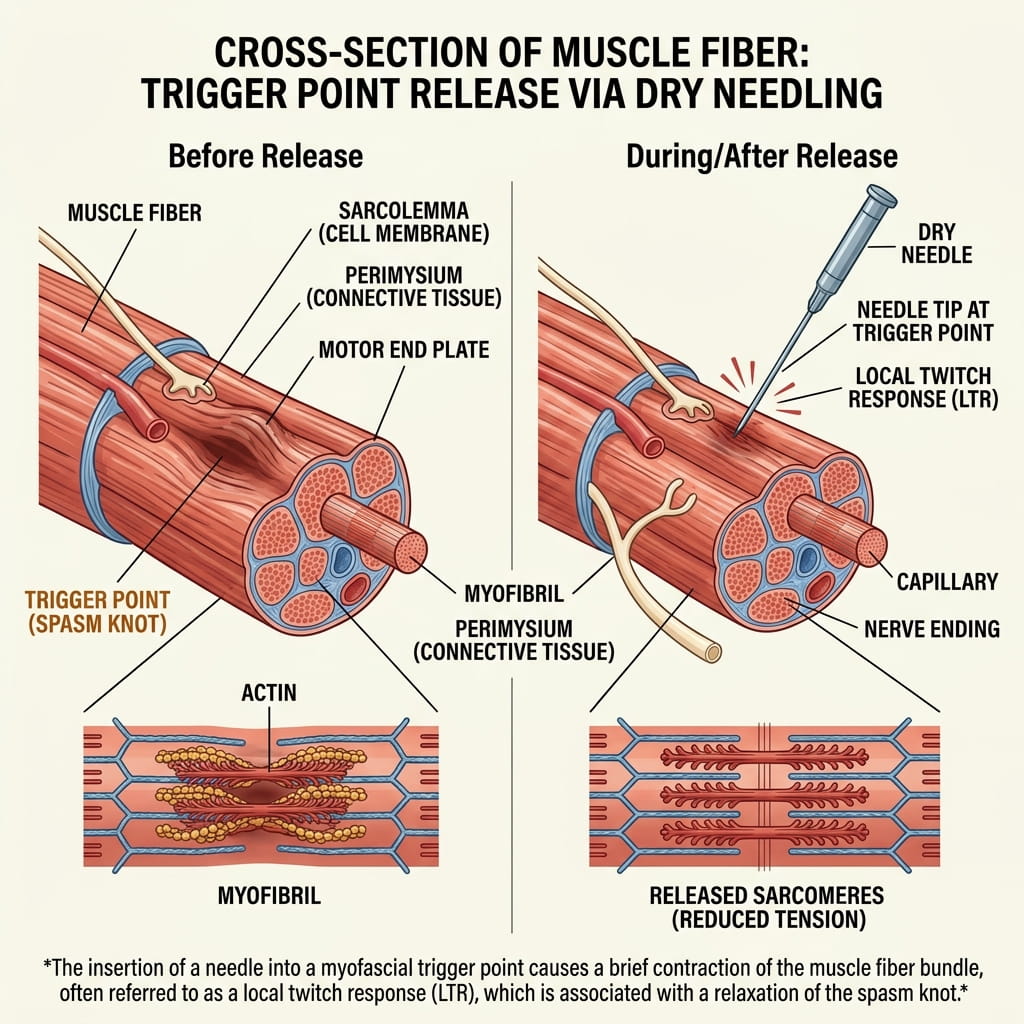
Anatomy & Technique Guide
Anatomical Focus
Neuromuscular motor endplates and taut muscular trigger bands.
Therapeutic Milestones
Triggering local twitch response to break muscle spasm cycles
Washout of inflammatory waste via micro-vasodilation
Immediate restoration of muscle length and joint mobility
Conditions Managed
- Chronic tension headaches and neck spasms
- Lower back myofascial pain and piriformis syndrome
- Tennis elbow (lateral epicondylitis)
- Plantar fasciitis and calf tightness
Key Therapy Benefits
- Instantly deactivates hyperirritable muscle trigger points
- Reduces muscle tone and relieves painful muscle spasms
- Improves flexibility, joint range of motion, and movement
- Promotes tissue healing by bringing oxygenated blood to the area
Our Treatment Process
Clinical location of muscle trigger points
Skin disinfection and micro-needle insertion
Elicitation of local twitch responses
Post-needling soft tissue flushing and stretching
Watch Clinical Exercise Demos
Follow Dr. Anshika Maheshwari on YouTube for step-by-step posture and rehabilitation tutorials.
Complementary Therapies & Care
Osteopathy
Holistic manual care designed to restore systemic body alignment, joint function, and fascial release.
Manual Therapy
Hands-on spinal mobilization, joint manipulation, and deep tissue activation to restore pain-free motion.
Cupping Therapy
Traditional myofascial decompression therapy that accelerates cellular repair and increases local blood circulation.
Ready to schedule this treatment?
Consult with Dr. Anshika Maheshwari in Sector 78 Noida to confirm if Dry Needling is the correct protocol for your diagnosis.