
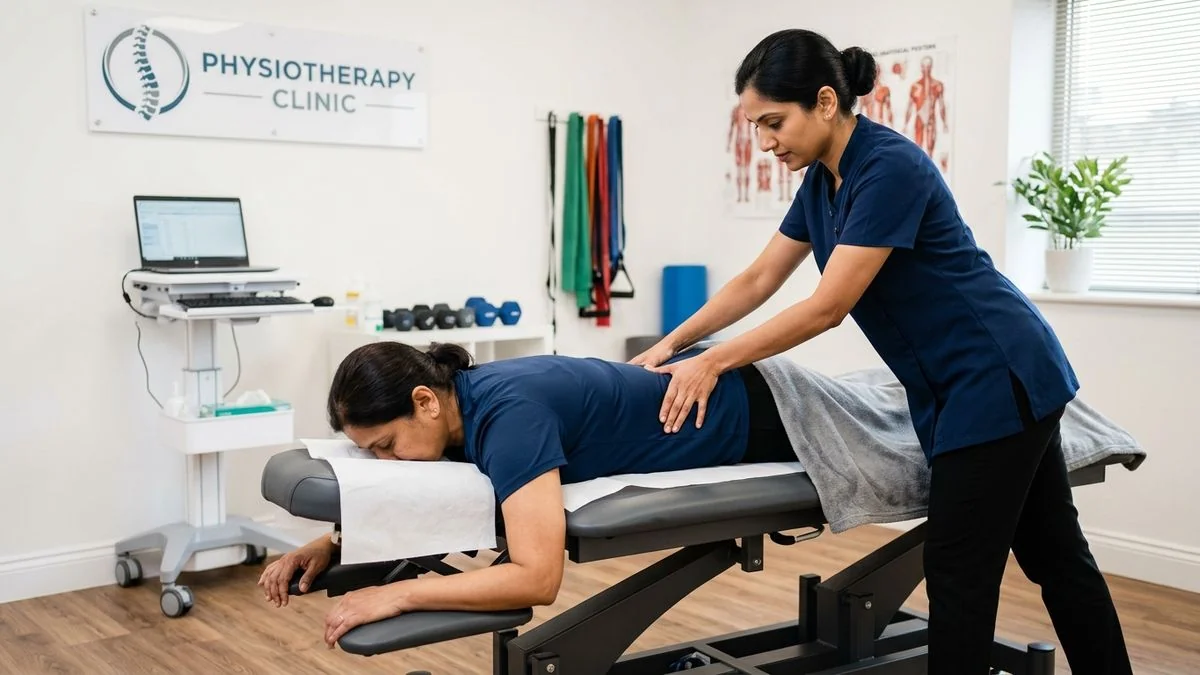
Walk, Climb Stairs & Move Pain-Free Without Knee Replacement
“Patellofemoral realignment, joint line decompression, and targeted quadriceps loading.”
Knee pain from osteoarthritis, patellofemoral tracking syndrome, meniscus tears, or ligament strains causes severe restriction in daily walking and stair climbing. Our clinical protocols focus on decompressing the tibiofemoral joint space, restoring patellar glide, and strengthening vastus medialis obliquus (VMO) and hip abductors to offload the knee joint cartilage naturally.
Common Symptoms
- Pain when climbing or descending stairs, squatting, or standing up from low chairs
- Crepitus: Grating, popping, or grinding noise inside the knee cap
- Morning joint stiffness lasting 15-30 minutes that eases with initial movement
- Swelling, fluid accumulation, or heat around the knee joint line
- Instability or the feeling that the knee is "giving way"
Root Biomechanical Causes
- Age-related knee osteoarthritis (OA) with articular cartilage wear
- Patellar mal-tracking caused by weak VMO and tight IT band/lateral retinaculum
- Meniscal tears from twisting or repetitive degenerative loading
- Flat feet or weak gluteal stabilizers causing excessive knee valgus collapse
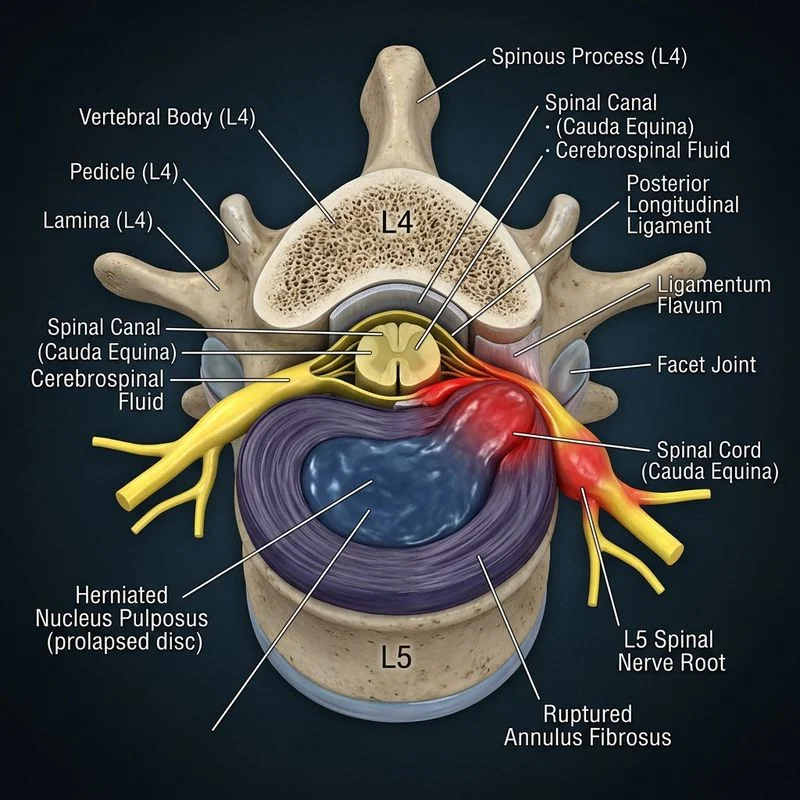
Biomechanical Anatomy & Nerve Path
Understanding the underlying spinal segments, nerve pathways, and joint lines allows us to apply precise manual techniques to decompress impingements without invasive procedures.
Clinical Insight
Every treatment at Be Your Therapist is administered directly by Dr. Anshika Maheshwari (MPT - Ortho) with specialized osteopathic and manual precision.
Our 4-Phase Non-Surgical Treatment Protocol
Phase 1: Joint Line Decompression & Inflammation Control
Manual tibiofemoral joint distraction and patellar mobilisations to relieve mechanical compression and reduce synovial fluid swelling.
Phase 2: Lateral Retinaculum & IT Band Release
Dry needling and deep myofascial release on tight lateral structures pulling the kneecap out of alignment.
Phase 3: VMO & Closed-Kinetic-Chain Loading
Targeted isometric quadriceps and gluteus medius loading to build a natural shock-absorber around the joint.
Phase 4: Gait Analysis & Foot Biomechanics
Correcting walking stride and foot mechanics to prevent uneven medial compartment wear.
Expected Recovery Timeline
Days 3–7: Painless stair climbing and elimination of morning knee stiffness
Weeks 2–3: 100% reduction in knee swelling and grinding sensation
Weeks 4–6: Ability to walk 5,000+ steps comfortably and resume active fitness
Clinical Home Exercise Prescriptions
Reinforce joint alignment between clinical sessions with these prescribed home drills.
Straight Leg Raise with VMO Focus
Focus: Quadriceps strength without joint wear
Terminal Knee Extension (TKE) with Band
Focus: Full terminal extension lockout
Side-Lying Clamshells with Resistance
Focus: Gluteal hip-knee alignment
Integrated Therapies Used for this Condition
Frequently Asked Questions
Can knee osteoarthritis be managed without knee replacement surgery?
Yes! Grade 1, 2, and 3 osteoarthritis responds exceptionally well to conservative physiotherapy. By building surrounding muscle support and decompressing the joint line, most patients avoid or significantly postpone surgery.
Why does my knee make cracking and grinding sounds?
Crepitus is caused by cartilage roughness or the kneecap rubbing unevenly against the femoral groove. Realigning patellar tracking through manual therapy and VMO strengthening smooths out this friction.
Is walking good for knee osteoarthritis?
Yes, moderate low-impact walking nourishes cartilage with synovial fluid, provided your joint is properly aligned and shock-absorbed by strong leg muscles.
Ready to begin your recovery?
Book a 1-on-1 diagnostic consultation with Dr. Anshika Maheshwari at Be Your Therapist in Sector 78 Noida.