
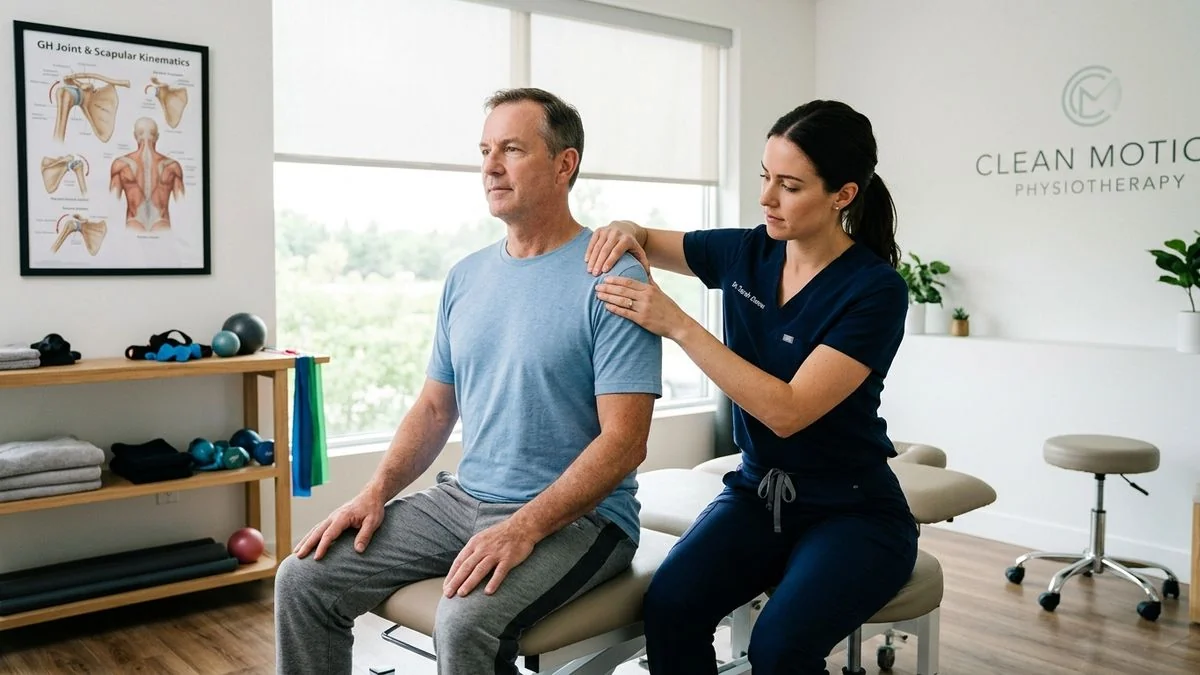
Restore Full Pain-Free Shoulder Range of Motion
“Multi-plane joint capsule glides, manual capsular stretching, and scapular rhythm rehab.”
Frozen shoulder (adhesive capsulitis) is characterized by progressive stiffness, severe night pain, and profound loss of shoulder joint motion due to inflammatory thickening and contracture of the glenohumeral joint capsule. Without active clinical physiotherapy, recovery can drag on for 2-3 years. Our focused manual capsular mobilization accelerates full recovery to weeks.
Common Symptoms
- Severe aching pain in the shoulder, especially worse at night and when sleeping on that side
- Inability to reach behind your back, hook a bra, reach the back pocket, or comb hair
- Progressive joint stiffness where the shoulder feels mechanically "locked"
- Sharp catch pain with sudden arm movements
- Compensatory shoulder shrugging when attempting to raise the arm
Root Biomechanical Causes
- Post-immobilization after a minor sprain, fall, or rotator cuff injury
- Diabetes mellitus and thyroid disorders (which increase capsular fibrosis risk by 5x)
- Chronic subacromial impingement leading to secondary capsular thickening
- Post-surgical shoulder recovery delays
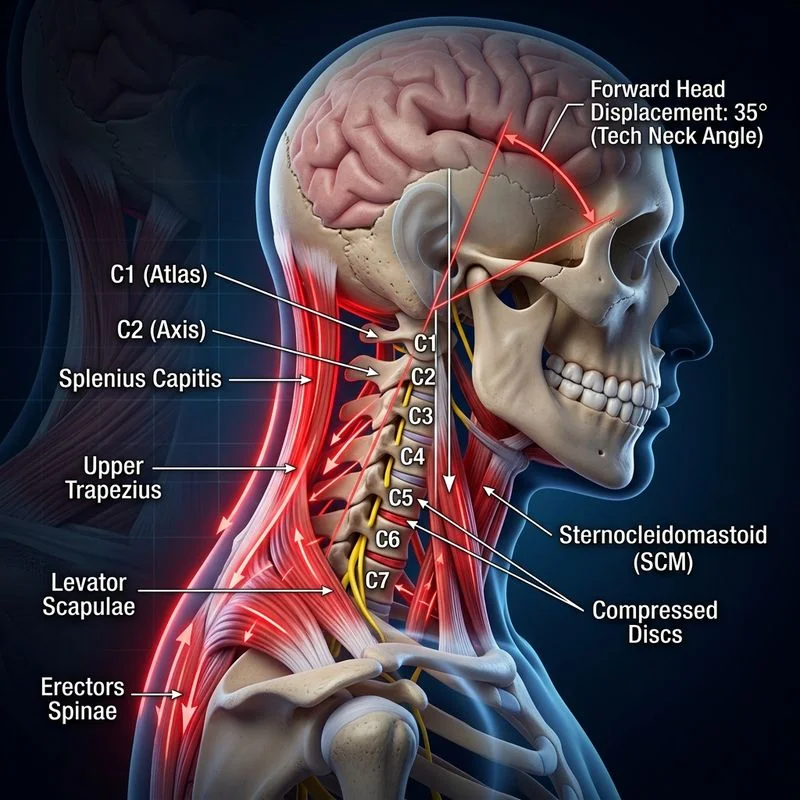
Biomechanical Anatomy & Nerve Path
Understanding the underlying spinal segments, nerve pathways, and joint lines allows us to apply precise manual techniques to decompress impingements without invasive procedures.
Clinical Insight
Every treatment at Be Your Therapist is administered directly by Dr. Anshika Maheshwari (MPT - Ortho) with specialized osteopathic and manual precision.
Our 4-Phase Non-Surgical Treatment Protocol
Stage 1 (Freezing): Pain & Inflammation Control
Gentle Maitland grade I-II glenohumeral oscillations, dry needling on rotator cuff trigger points, and pain-free active-assisted range.
Stage 2 (Frozen): Capsular Stretch & Joint Mobilisation
End-range Kaltenborn glides, inferior and posterior capsular manual stretch, and hydro-mobilization principles.
Stage 3 (Thawing): Scapular Rhythm & Strength
Strengthening the serratus anterior, lower trapezius, and rotator cuff to restore smooth 2:1 scapulohumeral rhythm.
Expected Recovery Timeline
Week 1: Immediate relief from throbbing night pain and restful sleep
Weeks 2–4: 30° to 50° increase in arm elevation and outward rotation
Weeks 6–8: Full functional overhead reach and behind-back movement restored
Clinical Home Exercise Prescriptions
Reinforce joint alignment between clinical sessions with these prescribed home drills.
Codman Pendulum Swings
Focus: Passive joint distraction
Finger-Ladder Wall Climb
Focus: Active-assisted elevation
Towel Internal Rotation Stretch
Focus: Posterior capsule stretch
Integrated Therapies Used for this Condition
Frequently Asked Questions
Why does frozen shoulder take so long to heal on its own?
The shoulder joint capsule becomes fibrotic and contracts like shrink-wrap. Without targeted clinical joint glides, the capsule remains stiff for up to 24-36 months. Physiotherapy stretches the capsule and speeds up healing dramatically.
Is frozen shoulder treatment painful?
We use gentle, progressive joint mobilizations calibrated to your pain tolerance. We never force joint manipulation violently, ensuring safe and comfortable recovery.
Are diabetic patients more prone to frozen shoulder?
Yes, elevated blood sugar causes collagen molecules in the joint capsule to cross-link, making diabetics 5 times more vulnerable. We tailor specific diabetic capsular rehab protocols.
Ready to begin your recovery?
Book a 1-on-1 diagnostic consultation with Dr. Anshika Maheshwari at Be Your Therapist in Sector 78 Noida.