

Seated Spinal Twist
"Spinal rotation and lumbar decompression"
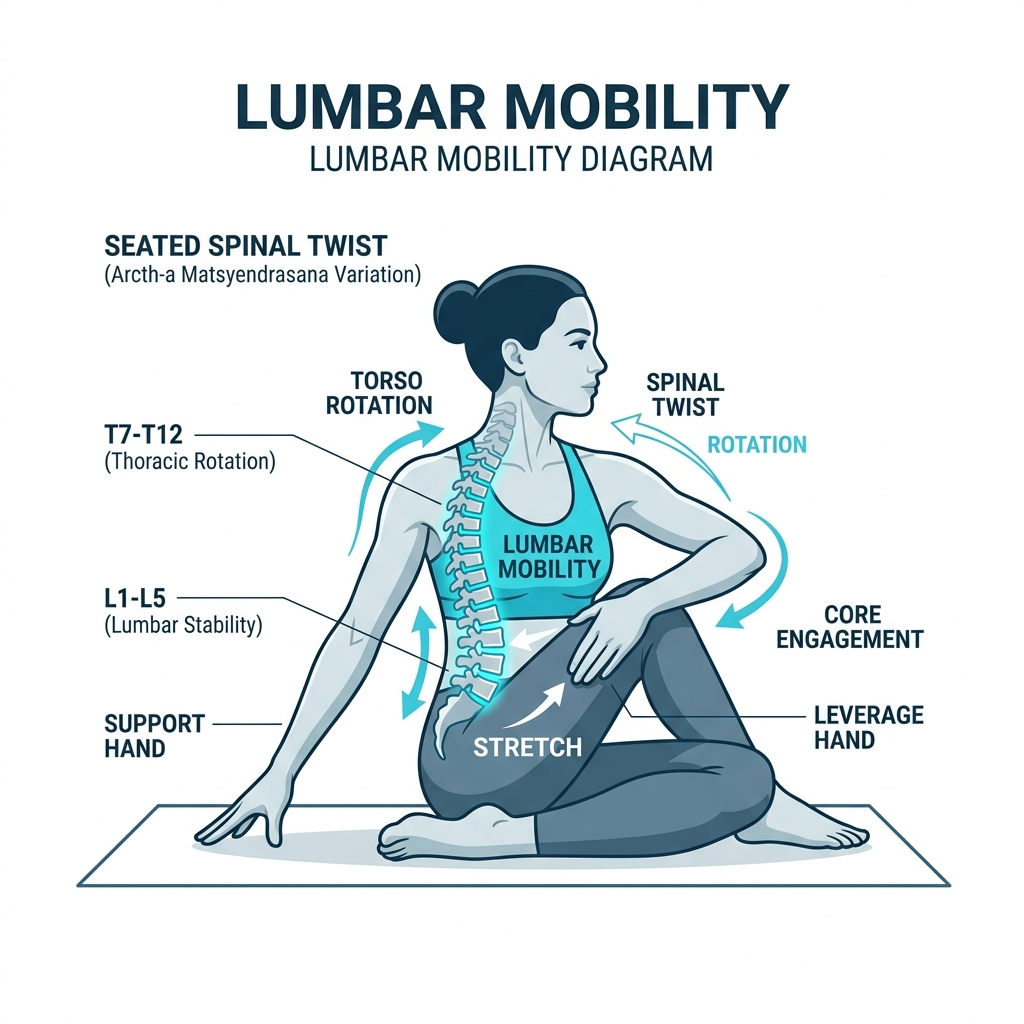
The Seated Spinal Twist is a rotational stretch that targets the paraspinal muscles, glutes, and obliques. Static postures lock the spine in one plane, leading to stiffness. Actively twisting the torso decompresses the vertebrae, increases blood flow, and improves active range of motion, providing immediate lower back relief.
Target Reps
3 stretches per sideSets
1 setHold Time
20 secondsStep-by-Step Instructions
Sit upright on the floor with your legs extended straight in front of you.
Bend your right knee and place your right foot flat on the outside of your left knee.
Place your right hand on the floor behind your hips for support.
Inhale, extending your left arm high, then exhale and twist your torso to the right, wrapping your left arm around your right knee (or hook left elbow outside right knee).
Hold for 20 seconds, lengthening your spine on inhalations and twisting slightly deeper on exhalations. Switch sides.
Biomechanical Form & Execution Analysis
Key Alignment Focus Points
- Sit tall on sit bones, extending crown of head up
- Initiate twist from core and ribcage, not shoulders
- Keep shoulders relaxed, down away from ears
Common Form Mistakes to Avoid
- Slouching upper back while twisting
- Pulling with arms to force rotation
- Collapsing hip alignment
Biomechanical Benefits
- Improves rotational range of motion in the thoracic and lumbar spine
- Stretches the outer hips, glutes, and lower back paraspinals
- Gently decompresses spinal joints and increases local blood circulation
- Aids in spinal alignment and core oblique flexibility
Precautions & Safety
- Keep your spine tall and vertical; do not slouch or lean backward while twisting.
- Twist from the torso and mid-back, not by pulling on your neck or knee too hard.
- Avoid if you have acute, unmanaged lumbar disc herniations or severe back spasms.
Experiencing severe or worsening pain?
Do not force through acute pain. Schedule a complete diagnostic physical assessment with Dr. Anshika Maheshwari to build a clinical treatment path tailored to your skeletal structure.