
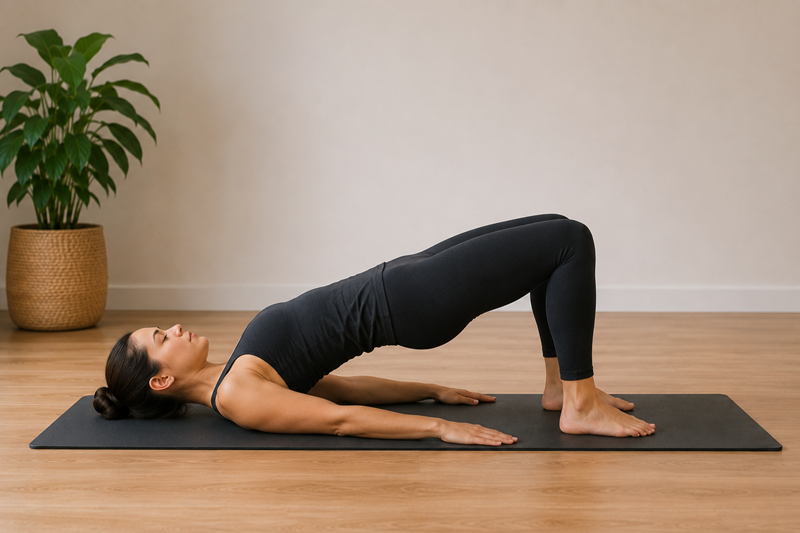
Glute Bridge
"Pelvic stabilization and gluteal strengthening"
The Glute Bridge is a highly effective rehabilitation exercise that targets the gluteus maximus, hamstrings, and core. Weak glutes are a primary driver of lower back strain, as the lumbar spine overcompensates for poor hip stability. By building glute strength, this exercise stabilizes the pelvis and unloads stress from the lower back.
Target Reps
12-15 repsSets
3 setsHold Time
2 seconds at the topStep-by-Step Instructions
Lie on your back on a mat, knees bent and feet flat on the floor, hip-width apart.
Place your arms by your side, palms flat on the floor.
Engage your core and squeeze your glutes, then press through your heels to lift your hips.
Lift until your knees, hips, and shoulders form a straight diagonal line. Do not arch your lower back.
Pause at the top, squeezing glutes tightly for 2 seconds, then slowly lower your hips to the starting position.
Biomechanical Form & Execution Analysis
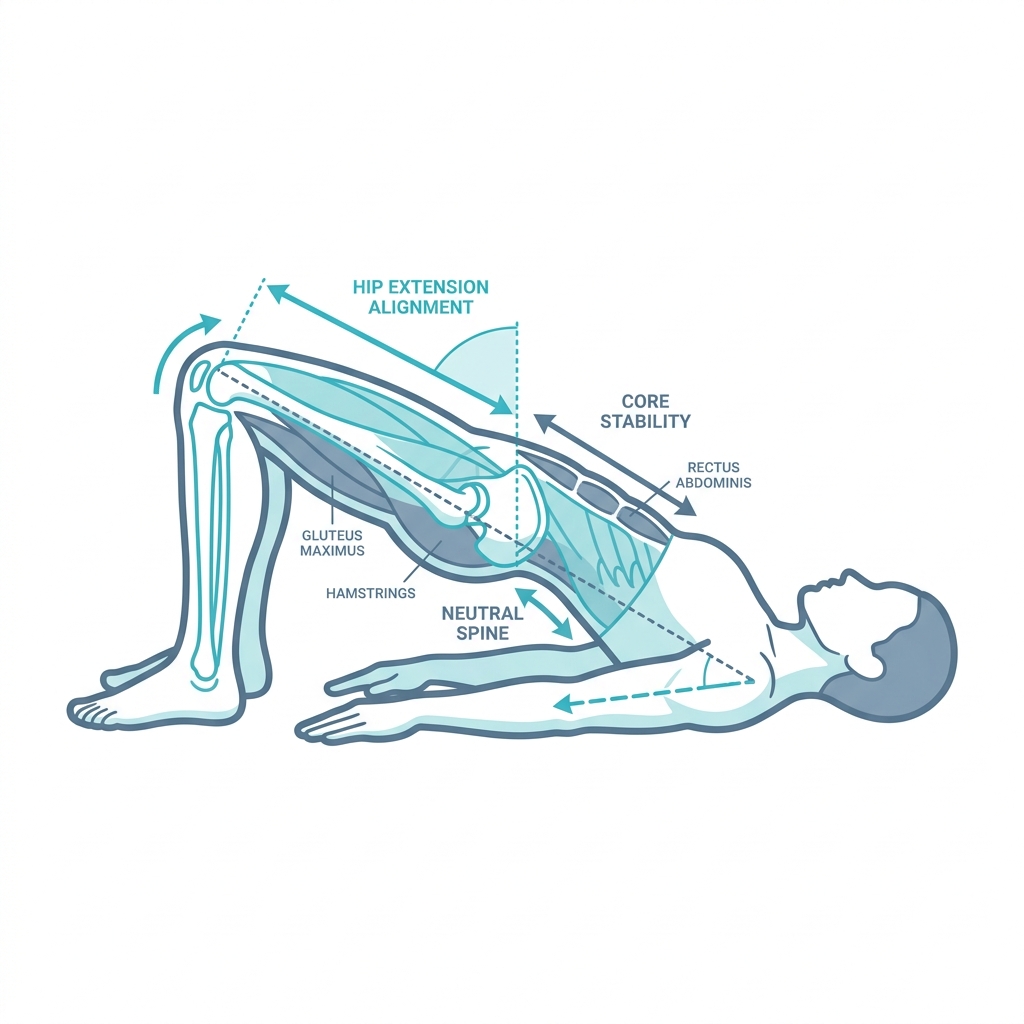
Key Alignment Focus Points
- Press heels into floor to activate glutes
- Align hips, knees, and shoulders in a straight line at the top
- Maintain a neutral lower back by bracing core
Common Form Mistakes to Avoid
- Arching lumbar spine at the top of the bridge
- Allowing knees to cave inward
- Pushing from toes instead of heels
Biomechanical Benefits
- Strengthens the glutes, hamstrings, and deep transverse abdominis core
- Improves pelvic alignment and reduces anterior pelvic tilt
- Decreases stress on the lower back by building solid hip support
- Improves hip extension mobility
Precautions & Safety
- Do not lift the hips too high; this causes the lumbar spine to hyperextend.
- Ensure the driving force comes from your heels and glutes, not your lower back or hamstrings.
- Keep your knees aligned, not allowing them to cave inwards.
Experiencing severe or worsening pain?
Do not force through acute pain. Schedule a complete diagnostic physical assessment with Dr. Anshika Maheshwari to build a clinical treatment path tailored to your skeletal structure.