
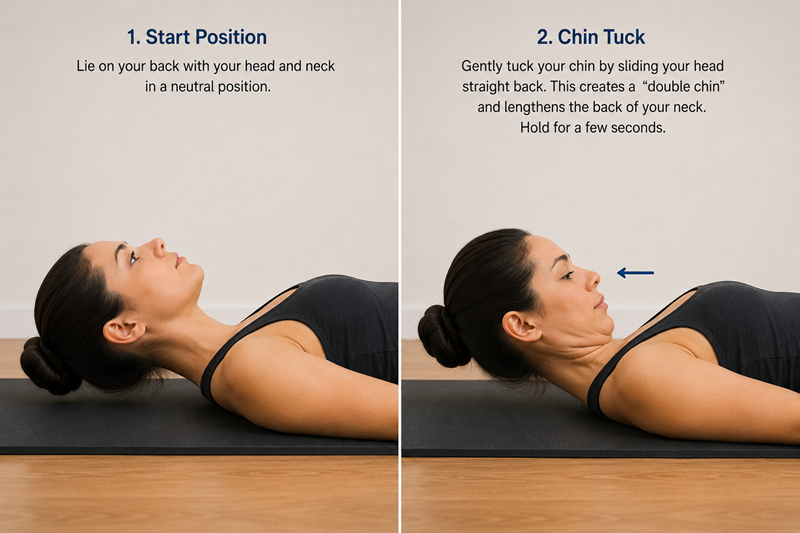
Chin Tucks
"Cervical spine alignment and deep neck flexor strengthening"
Chin Tucks are one of the primary exercises used to strengthen the deep cervical flexor muscles (the muscles at the front of the neck) and stretch the suboccipital muscles (at the base of the skull). Long hours looking at phones and computers lead to a forward head posture. This exercise pulls the skull back over the spine, relieving massive neck joint stress.
Target Reps
10 repsSets
3 setsHold Time
5 secondsStep-by-Step Instructions
Sit or stand upright with your shoulders relaxed. Look straight ahead.
Place a finger on your chin as a reference point.
Without tilting your head down, pull your head straight back as if trying to make a double chin.
Imagine sliding the back of your skull backward along an invisible flat surface.
Hold this retracted position for 5 seconds, feel the stretch at the base of your skull, then release.
Biomechanical Form & Execution Analysis
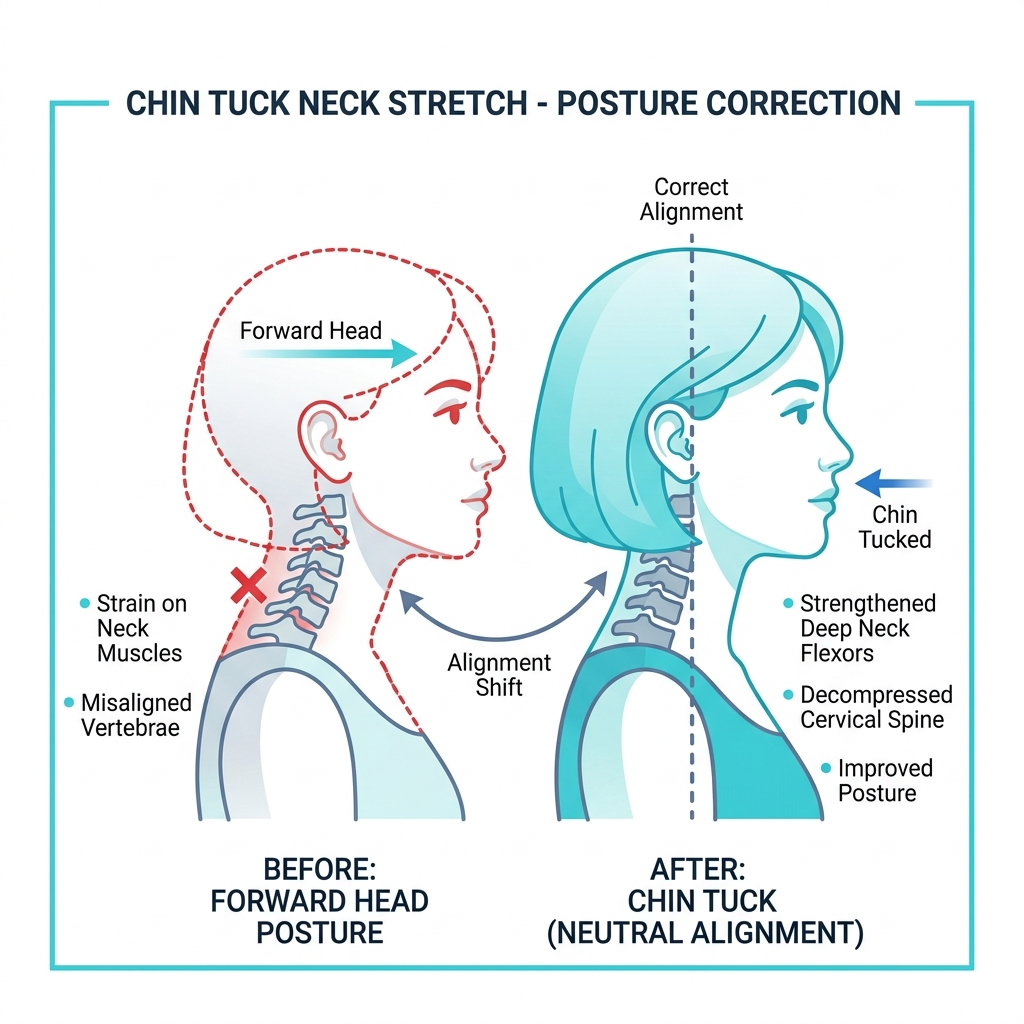
Key Alignment Focus Points
- Move head horizontally backward, like making a double chin
- Keep gaze straight ahead, do not tilt head down
- Keep shoulders relaxed and back
Common Form Mistakes to Avoid
- Looking down or nodding head
- Forcing neck too hard, straining front muscles
- Rounding upper back forward
Biomechanical Benefits
- Strengthens deep neck flexor muscles responsible for holding the head upright
- Stretches tight suboccipital muscles to relieve tension headaches
- Improves alignment of the cervical spine, reducing neck and upper back pain
- Corrects 'forward head posture' caused by screen usage
Precautions & Safety
- Do not tilt your head up or down; keep your gaze horizontal throughout.
- Do not pull your head back so hard that it restricts breathing or swallowing.
- Stop if you feel immediate radiating pain or tingling in your arms.
Experiencing severe or worsening pain?
Do not force through acute pain. Schedule a complete diagnostic physical assessment with Dr. Anshika Maheshwari to build a clinical treatment path tailored to your skeletal structure.